
Most people do not automatically connect changes in body weight with the way they sleep at night. They may notice they are snoring more, waking up tired, or feeling foggy during the day, but they do not always think weight fluctuations could be part of the reason. The truth is, sleep disorders can be influenced by a lot of different factors, and body weight is one of the most important ones to understand.
At El Paso Sleep Center, this comes up often. Someone may come in focused on feeling exhausted, waking up with headaches, or dealing with restless nights, and only later realize that recent weight changes may be affecting their breathing and sleep quality more than expected. This does not mean weight is the only explanation behind every sleep problem, of course. But it can play a bigger role than many people realize, especially when symptoms have gradually gotten worse over time.
The important thing to understand is that this relationship can go both ways. Weight changes can affect sleep, and poor sleep can also make it harder to manage weight. That is part of what makes the cycle so frustrating. A person may feel too tired to be active, too drained to stay consistent with routines, and too worn out to notice how much their sleep patterns are adding to the problem.
Why this connection is often missed
A lot of sleep-related issues develop slowly. They do not always show up all at once. Instead, someone may start snoring a little more often, feel less refreshed in the morning, or notice they are more sleepy during the day than they used to be. Because these changes can be subtle at first, they often get brushed off.
Many people assume the problem is just stress, age, a busy schedule, or sleeping in the wrong position. Sometimes those things do matter. But when body weight has shifted recently, especially upward, it is worth considering how that may be affecting the airway and the quality of sleep throughout the night.
That is why understanding the connection between weight and sleep apnea is so important. In many cases, extra tissue around the neck and upper airway can make it more difficult for air to move freely during sleep. When muscles relax overnight, that airway may become narrower than it should be, increasing the chances of interrupted breathing or noisy, labored sleep.
It is not just about appearance or numbers on a scale
This topic can feel sensitive, and that is understandable. Conversations around weight are often oversimplified, and that usually does not help anyone. In the context of sleep, the issue is not about appearance. It is about function. It is about what happens to the body at night and whether breathing stays steady and uninterrupted.
Even a moderate weight increase may affect sleep differently from one person to another. Some people are more vulnerable because of their anatomy, airway structure, or other health factors. Others may experience more noticeable symptoms only after gradual changes build up over time.
That is why it helps to focus on patterns instead of assumptions. If someone has gained weight and also notices louder snoring, lower energy, or more restless sleep, those signs deserve attention. They may not mean the same thing in every case, but they are still meaningful clues.
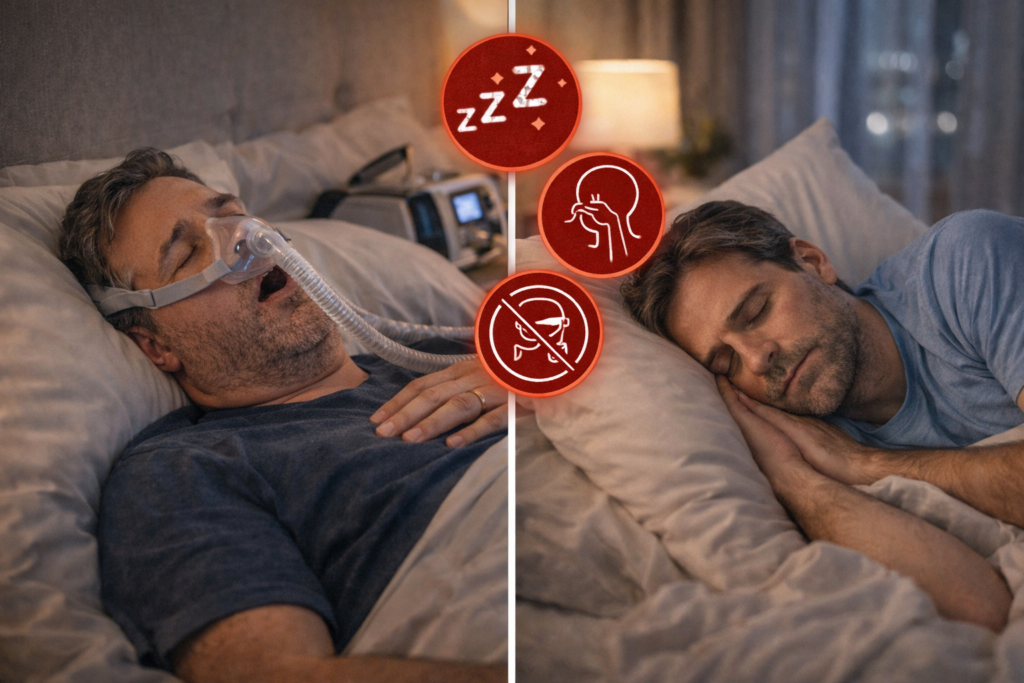
Why snoring often gets worse with weight changes
One of the first things people notice is that snoring gets louder, more frequent, or more disruptive. The connection between weight gain and snoring is common enough that many bed partners pick up on it before the person snoring does.
That happens because airway narrowing can create more resistance when breathing during sleep. As air pushes through a smaller space, tissues vibrate more easily, which can lead to heavier snoring sounds. Sometimes it remains in the category of simple snoring. In other cases, it may be a sign that breathing is becoming less stable overnight.
A few clues that snoring may be part of a bigger sleep issue include:
- It happens most nights of the week
- It has become noticeably louder over time
- A partner notices gasping or pauses in breathing
- The person wakes up tired despite spending enough hours in bed
- Morning headaches or dry mouth are becoming more common
- Daytime fatigue is affecting work, mood, or concentration
Snoring is often treated like a minor annoyance, but when it changes alongside body weight and daytime symptoms, it may be worth taking a closer look.
Risk factors can overlap more than people expect
Sleep-related breathing problems rarely come from just one cause. In many cases, several factors combine at the same time. That is why understanding sleep apnea risk factors can be so helpful.
Weight is one piece of the puzzle, but other factors may include:
- Family history
- Neck size and airway anatomy
- Sleeping position
- Age
- Alcohol use before bedtime
- Nasal congestion
- Underlying medical conditions
- Poor overall sleep habits
When several of these overlap, symptoms may become more noticeable. Someone who already has a naturally narrow airway, for example, may be more likely to develop nighttime breathing problems after gaining weight than someone with a different anatomy. This is one reason two people with similar body sizes may have very different sleep experiences.
The daytime side of the problem matters too
Most people think of sleep problems as nighttime issues, but the daytime effects can be just as disruptive. When breathing is interrupted or sleep becomes fragmented, the body does not move through the same healthy sleep cycles it needs for real recovery.
That can show up during the day as:
- Brain fog
- Lower patience
- Difficulty focusing
- Reduced motivation
- Morning headaches
- Excessive sleepiness
- Low energy even after a full night in bed
- A general sense of not feeling like yourself
This is where sleep health becomes a much bigger conversation than just how many hours you are spending in bed. A person can technically sleep long enough and still wake up feeling drained if the quality of that sleep is poor. That is why symptoms should not be judged only by bedtime and wake time. How you feel during the day matters just as much.
Breathing issues during sleep are easy to overlook
A lot of people do not realize they are dealing with breathing issues during sleep because, of course, they are asleep when it happens. They may not hear themselves snore or know they are gasping. In many cases, a partner or family member is the first one to notice the pattern.
Others only suspect a problem because of the way they feel the next day. They wake up unrefreshed, feel exhausted by mid-morning, depend heavily on caffeine, or struggle to stay alert in quiet moments. Over time, these patterns can start to feel normal, even when they are not.
Signs that breathing may be disrupted at night can include:
- Loud or frequent snoring
- Choking or gasping during sleep
- Restless tossing and turning
- Waking with a dry mouth
- Frequent awakenings
- Feeling unrefreshed in the morning
- Daytime fatigue that seems out of proportion
When these signs show up after weight changes, that pattern deserves attention rather than dismissal.
Why the cycle can be hard to break
One of the most frustrating parts of this issue is that poor sleep can make healthy routines harder to maintain. When someone is exhausted, even basic habits can start falling apart. Exercise feels harder. Cravings can increase. Motivation dips. Consistency becomes much more difficult.
That means a sleep problem may quietly reinforce weight struggles, while weight changes may continue making sleep worse. It becomes a loop that is easy to get stuck in and hard to explain unless someone understands how connected these issues really are.
This is also why people should not blame themselves for feeling overwhelmed by it. When sleep is poor, everything feels harder. The goal is not perfection. The goal is identifying what is interfering with rest and finding a practical path forward.
When it is time to pay closer attention
If sleep has changed alongside weight, it may be worth asking a few honest questions:
- Has snoring become more frequent or louder?
- Am I waking up tired more often than before?
- Has my energy dropped even when I try to get enough sleep?
- Do I feel less sharp, less patient, or less productive during the day?
- Has anyone noticed pauses in my breathing overnight?
- Have these symptoms become more common after recent weight changes?
These questions do not replace an evaluation, but they can help clarify whether a pattern is developing.
At El Paso Sleep Center, the goal is to help patients understand that sleep issues are not always random. Sometimes the body is sending signals that breathing, rest, and recovery are not working the way they should. Catching that pattern early can make a real difference.
Final Thoughts
Weight changes can affect much more than clothing sizes or energy levels. They can quietly influence how well you breathe at night, how deeply you sleep, and how you feel during the day. If your rest has become less refreshing and your symptoms have gradually grown harder to ignore, it may be time to look at the bigger picture. Better nights often start with understanding what has changed and why your body may be responding differently than before.