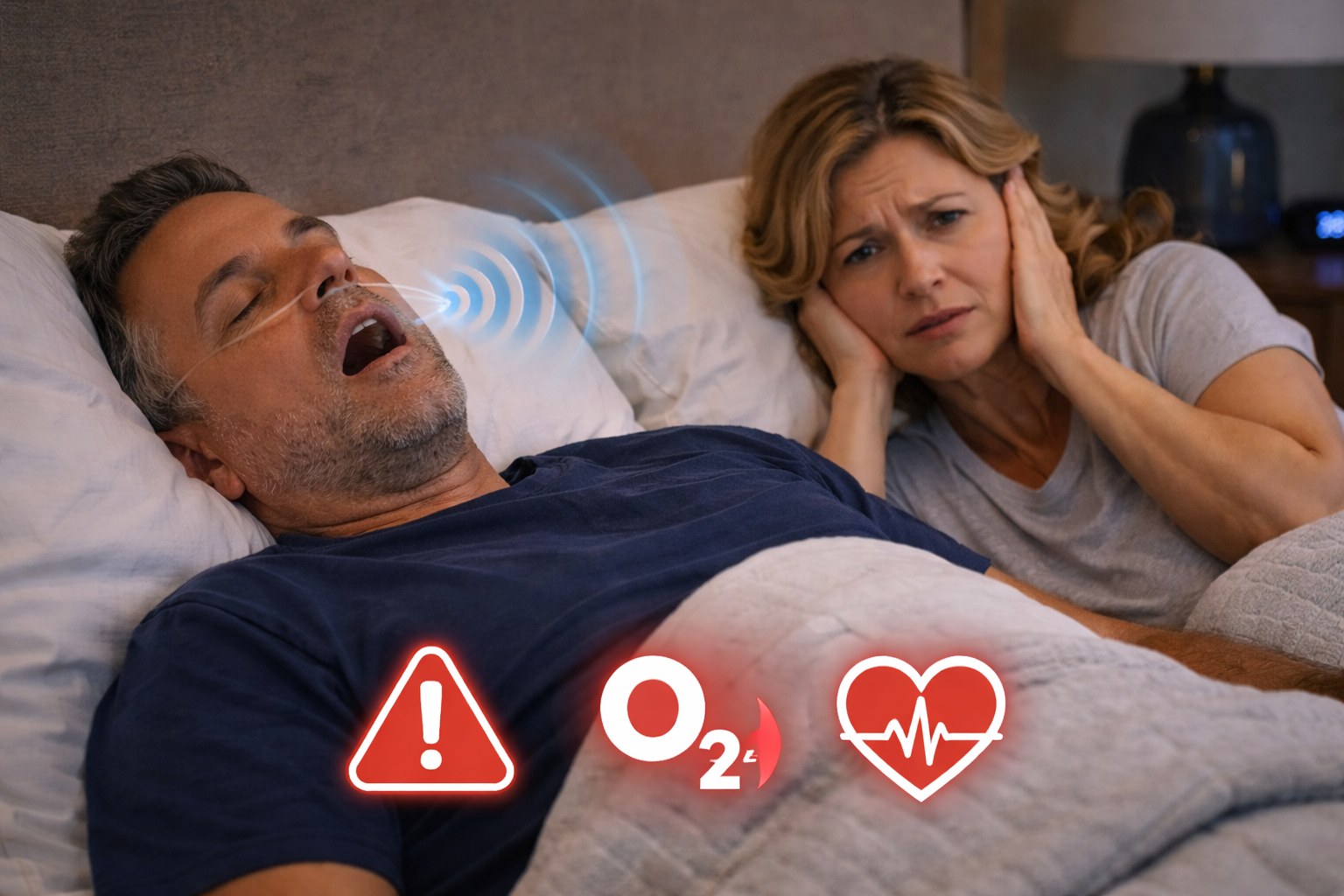
Snoring is one of those sleep issues people tend to joke about, ignore, or brush off for years. A lot of families treat it like a harmless habit. Maybe it is the punchline in the house, or maybe it is just something a partner has learned to live with. But the truth is, the relationship between snoring and sleep apnea is something many people do not fully understand until daytime fatigue, morning headaches, or restless nights start becoming harder to ignore.
At El Paso Sleep Center, this is one of the most common concerns people bring up. They are not always sure whether the snoring in question is simply annoying or whether it could be a sign of something more serious. That uncertainty makes sense. Not every person who snores has a sleep disorder, but some forms of snoring absolutely deserve a closer look. The key is knowing what to watch for and understanding when nighttime noise may be pointing to a bigger issue with breathing, sleep quality, and overall health.
Snoring by itself is not always the problem
Snoring happens when airflow becomes partially blocked during sleep, causing tissues in the airway to vibrate. That can happen for several reasons, and not all of them automatically signal a major medical condition. In some cases, snoring is tied to sleep position, nasal congestion, allergies, alcohol use, or simple anatomy.
That said, the fact that snoring is common does not mean it should always be ignored. A lot depends on how often it happens, how intense it is, and what other symptoms show up alongside it.
Some people only snore occasionally, especially when they are sick or sleeping on their back. Others snore almost every night and still assume it is no big deal. That is where paying attention to patterns really matters.
What can cause loud snoring?
There are several possible loud snoring causes, and some are more concerning than others. Weight gain, nasal obstruction, enlarged tonsils, relaxed throat muscles, and airway shape can all play a role. Drinking alcohol before bed can make snoring worse, and so can sleeping flat on your back. Even chronic nasal stuffiness may contribute to heavier breathing sounds at night.
Still, volume alone is not the only thing that matters. What really raises concern is when loud snoring comes with disrupted breathing, gasping, choking, or major daytime sleepiness. That combination may suggest the airway is not just vibrating but repeatedly narrowing or closing during sleep.
A helpful way to think about it is this: snoring is a symptom, not a diagnosis. The real question is what kind of sleep pattern sits behind it.
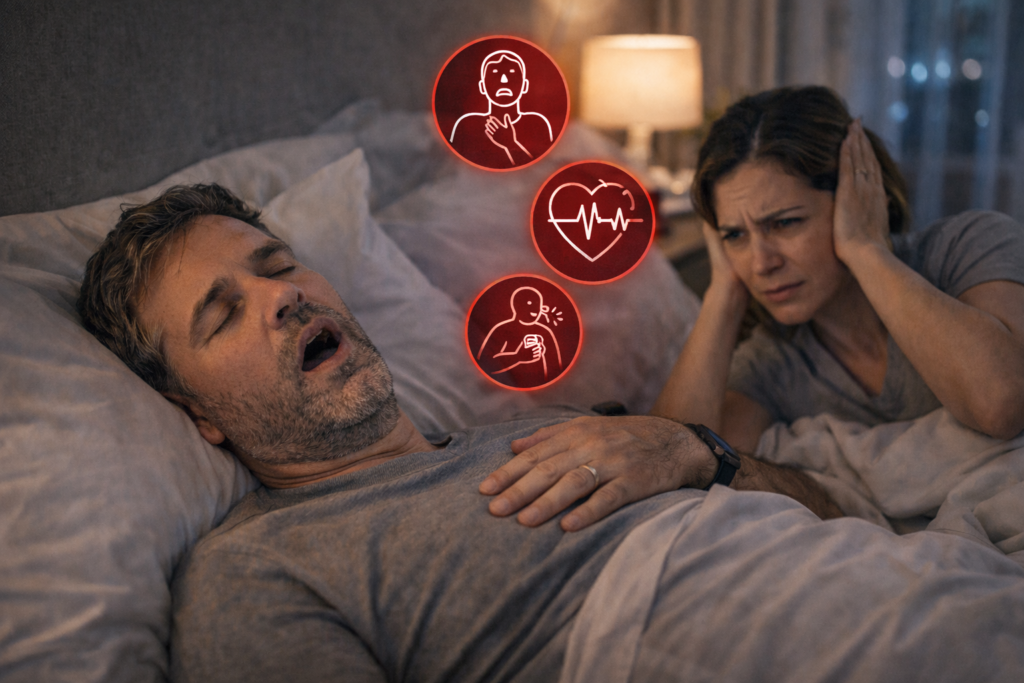
The difference between simple snoring and a sleep disorder
One reason this topic gets overlooked is that people often assume all snoring is basically the same. It is not. Some snoring stays in the category of nuisance. Other snoring points to repeated breathing problems that can affect sleep quality and health over time.
This is why it helps to know the common signs of sleep apnea instead of focusing only on the sound itself. A person may not realize anything unusual is happening during the night, but a partner or family member often notices the pattern first.
Warning signs may include:
- Pauses in breathing while asleep
- Gasping or choking sounds during the night
- Restless sleep
- Waking with a dry mouth
- Morning headaches
- Daytime exhaustion
- Trouble concentrating
- Mood changes or irritability
- Falling asleep during quiet moments
When these symptoms show up together, snoring deserves a closer look rather than a shrug.
Why breathing pauses matter so much
Of all the red flags, breathing interruptions during sleep are among the most important. These pauses can happen when the airway becomes blocked enough to reduce or temporarily stop airflow. The brain then has to push the body to partially wake up and resume breathing, often over and over throughout the night.
That repeated cycle can seriously affect sleep quality, even if the person does not remember waking up. They may think they slept for seven or eight hours, but the rest they got was fragmented and unrefreshing.
This kind of disrupted sleep can lead to:
- Constant daytime fatigue
- Brain fog
- Lower patience and mood stability
- Decreased productivity
- Difficulty staying alert while driving
- Poorer quality of life overall
That is why snoring should never be judged only by how annoying it sounds. Sometimes the bigger problem is what it says about airflow and oxygen during the night.
When symptoms point more clearly to sleep apnea
There are certain obstructive sleep apnea symptoms that tend to make providers more suspicious of an underlying sleep-breathing disorder. Obstructive sleep apnea happens when the upper airway repeatedly narrows or collapses during sleep, interrupting normal breathing and disturbing the body’s ability to stay in deeper, restorative sleep stages.
Some of the most common clues include:
- Heavy or frequent snoring
- Witnessed pauses in breathing
- Waking up suddenly, sometimes feeling short of breath
- Non-restorative sleep
- Morning headaches
- Low energy even after a full night in bed
- Trouble focusing during the day
- Increased sleepiness during meetings, reading, or watching TV
It is also worth noting that not everyone with this condition fits one stereotype. Some people assume only older adults or people with severe symptoms need evaluation. In reality, sleep apnea can affect a wider range of adults than many expect, and sometimes the symptoms build gradually enough that they become easy to normalize.
So when does snoring become dangerous?
This is the question many people really want answered: when snoring is dangerous. In general, it becomes more concerning when it is frequent, loud, and paired with signs that sleep quality or breathing are being disrupted.
Snoring should be taken more seriously when:
- It happens most nights of the week
- A partner notices pauses in breathing
- There are choking or gasping episodes
- The person wakes up tired almost every day
- Morning headaches are common
- Daytime sleepiness affects work or driving
- Mood, memory, or concentration have noticeably declined
- There is a history of high blood pressure or other health concerns along with poor sleep
In other words, danger is less about the sound itself and more about the pattern surrounding it. The more signs of disrupted breathing and daytime impairment there are, the more important it becomes to get evaluated.
Why people wait too long to do something about it
A lot of people put this off because they are used to the problem. They assume if they have been snoring for years, it cannot be that serious. Others avoid getting checked because they do not want to make a big deal out of it, or because they believe being tired is just part of adult life.
That is completely understandable, but it can also delay answers. When poor sleep becomes normal, people often stop noticing just how much it is affecting them. They may not connect their low energy, short temper, lack of focus, or restless nights back to a breathing issue happening while they sleep.
Sometimes a partner is the one who pushes the conversation forward. Sometimes it is a close call while driving, or a growing sense that something just feels off. Either way, listening to those warning signs matters.
What to do if this sounds familiar
If your snoring has become more intense, more frequent, or more disruptive, it is worth taking seriously. The same goes if someone close to you has noticed gasping, pauses in breathing, or unusually restless sleep.
A good next step may include:
- Paying attention to how often the snoring happens
- Asking a partner what they notice during the night
- Noting whether mornings feel unrefreshing
- Watching for daytime fatigue, poor focus, or headaches
- Seeking a professional sleep evaluation if symptoms keep showing up
At El Paso Sleep Center, the goal is to help patients move past guesswork. Snoring can seem simple on the surface, but in some cases it is the clearest clue that sleep is being disrupted in a much bigger way than expected.
Why getting answers can make a real difference
The biggest benefit of addressing this early is not just quieter nights. It is understanding whether your body is getting the rest it actually needs. When sleep quality improves, people often notice more steady energy, better mood, sharper focus, and less strain during the day.
Even if the cause turns out to be something less serious, getting clarity can still be valuable. It helps you stop wondering and start making informed decisions about your health instead of hoping the problem will sort itself out on its own.
Final Thoughts
Snoring is easy to laugh off, especially when it has been around for a long time. But sometimes the body gives subtle warnings before a bigger issue becomes obvious. If nights feel restless, mornings feel heavy, and daytime energy keeps slipping, it may be time to stop treating it like background noise. Taking a closer look at what is happening during sleep can be a smart step toward feeling better, functioning better, and finally getting the kind of rest your body has been missing.