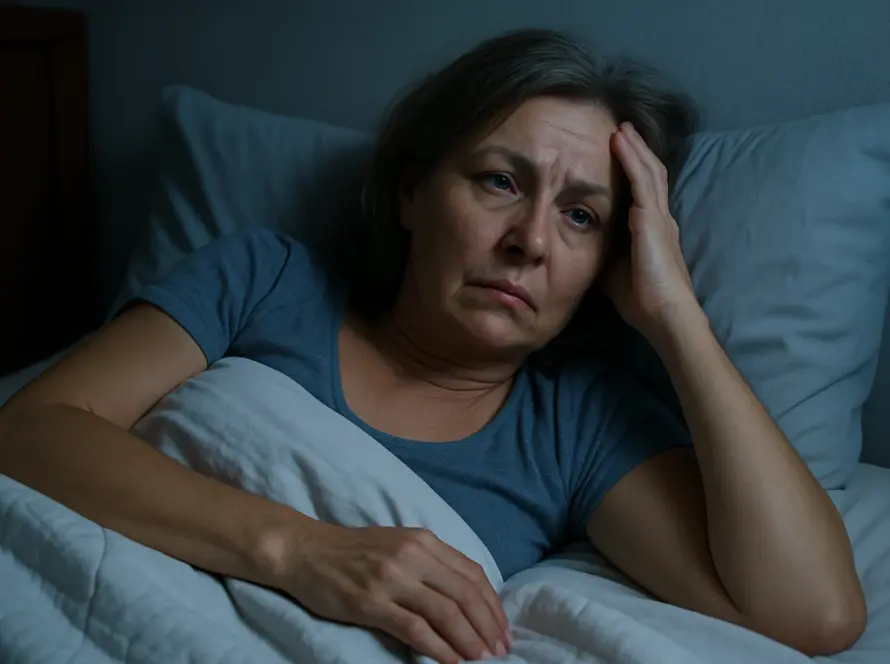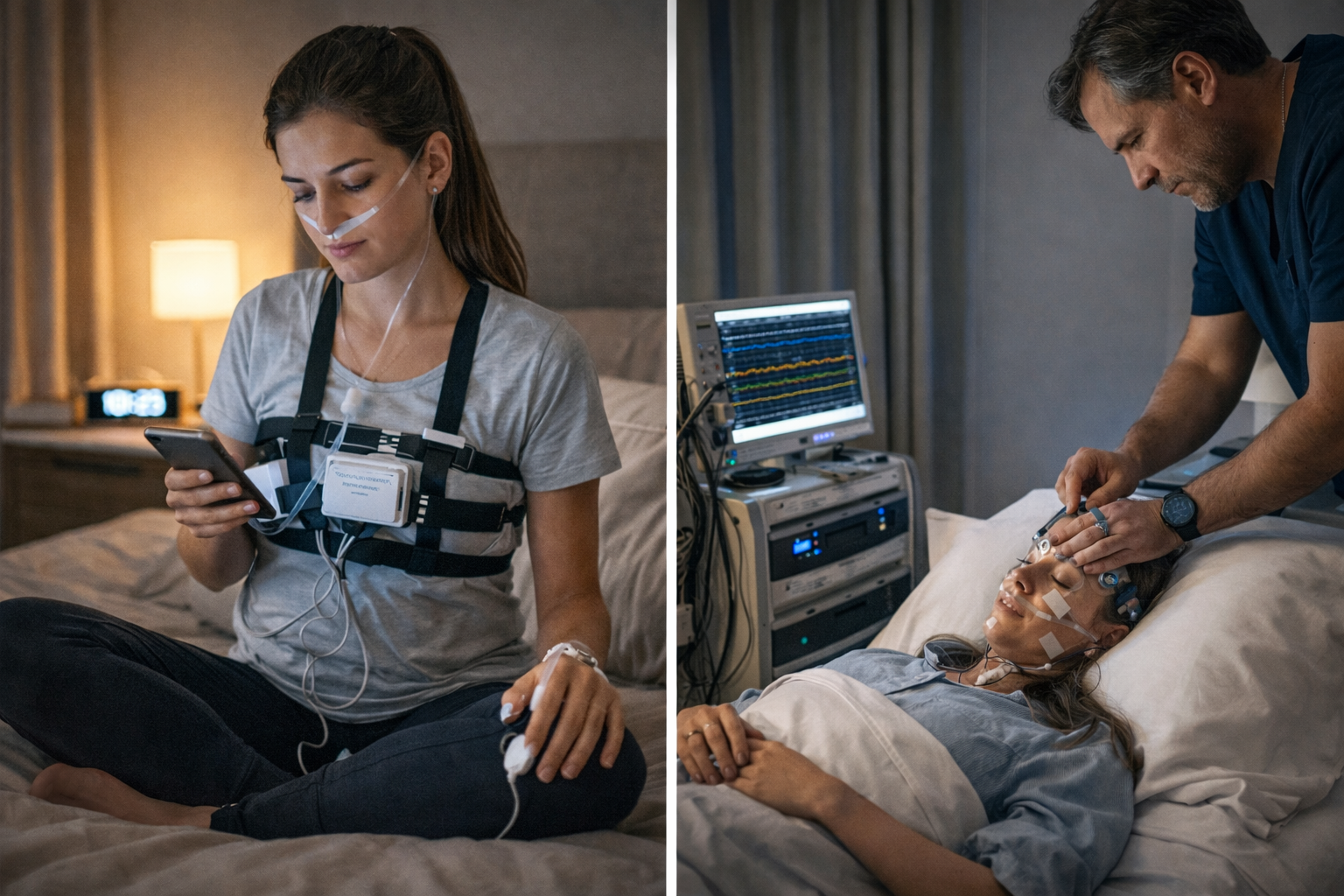
If you have been dealing with loud snoring, constant fatigue, morning headaches, or that frustrating feeling of never waking up refreshed, there is a good chance you have started looking into sleep testing. That is usually when people realize there is more than one path forward. Some hear about an at home sleep test and like the idea of doing everything from the comfort of their own bed. Others are referred to a sleep center and wonder whether a monitored overnight evaluation would give them better answers.
At El Paso Sleep Center, this is one of the most common questions people have when they begin the process: which type of sleep evaluation actually makes the most sense for them? The answer depends on your symptoms, your medical history, and what your provider is trying to rule out. There is no one-size-fits-all option, but there is a right fit for many patients once the bigger picture is clear.
The good news is that sleep testing has become more accessible, more flexible, and easier to understand than many people expect. You do not have to guess your way through it. Once you know what each option is designed to do, the decision becomes much less overwhelming.
Why sleep testing matters in the first place
A lot of people live with sleep-related symptoms for years before taking them seriously. They assume their exhaustion comes from stress, age, a busy work schedule, or “just not sleeping great.” But when poor sleep starts affecting focus, mood, energy, or even blood pressure, it is worth looking deeper.
Sleep evaluations can help uncover issues that are not obvious during the day. In some cases, the problem is breathing-related. In others, it may involve unusual movements during sleep, disrupted sleep cycles, or patterns that point to another underlying concern. Testing helps move the conversation away from guessing and toward actual answers.
That is especially important if you have symptoms like:
- Loud, frequent snoring
- Gasping or choking during sleep
- Waking up tired even after a full night in bed
- Daytime sleepiness that affects work or driving
- Trouble staying asleep
- Morning headaches
- Difficulty concentrating
- A bed partner who notices pauses in breathing
These signs do not automatically point to the same condition, which is why proper evaluation matters.
What an at-home test is designed to do
For many patients, the idea of a simpler and more convenient option is appealing. A home sleep apnea test is typically used when a provider strongly suspects obstructive sleep apnea and wants to evaluate breathing patterns during sleep in a home setting.
This kind of test usually involves a portable device that tracks specific data overnight, such as airflow, breathing effort, and oxygen levels. Instead of spending the night in a facility, you take the equipment home, follow the instructions, sleep in your own environment, and return the device for review.
There are a few reasons this route feels easier for many people:
- You sleep in your own bed
- The process tends to feel less intimidating
- There is no overnight stay in a facility
- It may be easier to fit into a busy schedule
- It offers a more convenient first step for some patients
That said, convenience is only one piece of the decision. The real question is whether this type of test matches what your symptoms suggest.
When testing at home may be a good fit
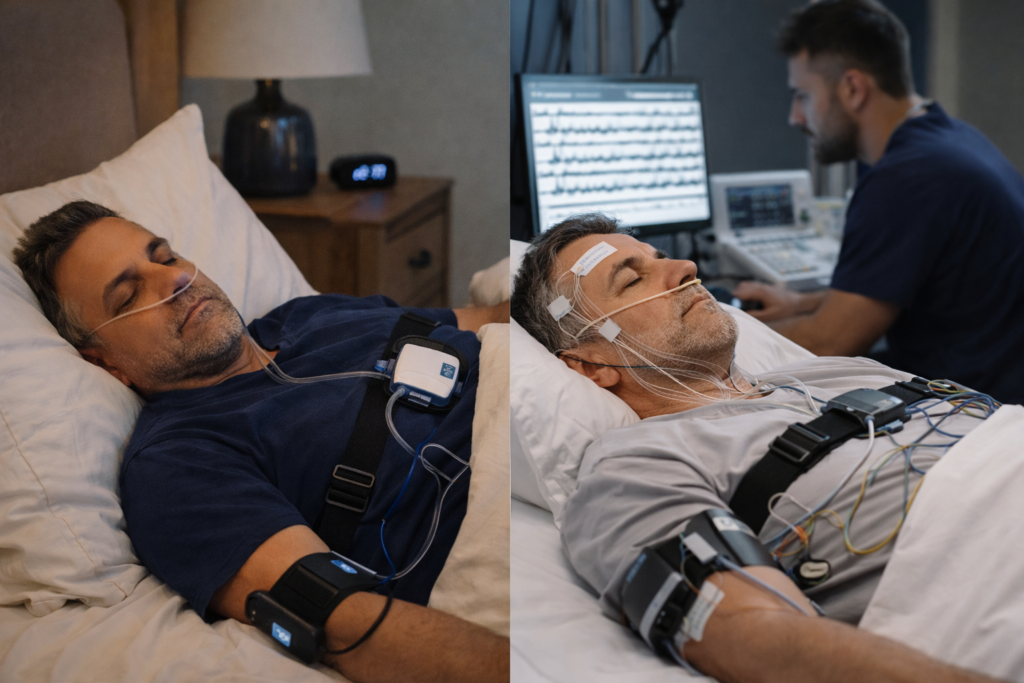
In the right situation, sleep apnea testing at home can be a very practical and effective option. It is often considered when symptoms strongly point toward obstructive sleep apnea and there are no major signs suggesting a more complex sleep issue.
Someone may be a good candidate if they have a fairly clear pattern, such as:
- Loud snoring on a regular basis
- Witnessed breathing pauses
- Excessive daytime tiredness
- Waking up gasping
- A high likelihood of obstructive sleep apnea based on symptoms and risk factors
For these patients, starting with home-based testing can feel straightforward and less disruptive. It can also help speed up the process of getting answers and discussing next steps.
Still, it is important to remember that not every sleep problem can be fully assessed with a take-home device. That is where a more comprehensive overnight evaluation may be recommended.
When a lab study may be the better choice
An in lab sleep study offers a more detailed look at what happens while you sleep. This type of evaluation is done in a controlled setting, where trained professionals monitor multiple body functions throughout the night.
That broader level of observation is helpful when symptoms are less straightforward or when there is concern about something beyond typical obstructive sleep apnea. A lab-based study can provide more in-depth information about brain activity, breathing, oxygen levels, heart rhythm, movement, and sleep stages.
This option may be recommended when:
- Symptoms do not clearly point to one issue
- A previous home test was inconclusive
- There may be more than one sleep disorder involved
- The patient has other medical concerns that complicate the picture
- The provider wants a more comprehensive overnight evaluation
For some people, spending the night in a sleep center sounds uncomfortable at first. But many patients end up feeling reassured by the level of monitoring and the amount of information gathered during the night.
Comparing the two without overcomplicating it
When people weigh their sleep study options, they often assume the decision is mainly about comfort versus accuracy. In reality, it is more about choosing the right tool for the right clinical situation.
Here is the simplest way to think about it:
- Home-based testing is often more convenient and works well in select cases
- Lab-based testing is more detailed and useful when symptoms are broader or more complex
- The best choice depends on what needs to be measured, not just what feels easier
- A provider’s recommendation usually reflects the need for either screening or deeper evaluation
That is why it helps to avoid thinking of one as “better” in every case. Each serves a purpose. The goal is not to choose the easier option by default. The goal is to choose the one most likely to give meaningful answers.
The real goal is getting an accurate diagnosis
Whether your provider starts with home testing or recommends a lab evaluation, the bigger purpose is diagnosing sleep disorders as clearly and efficiently as possible. That includes understanding not just whether something is wrong, but what kind of issue is affecting your sleep and how severe it may be.
A rushed or poorly matched test can delay answers. On the other hand, the right evaluation can help you move toward treatment with much more confidence. For many people, that means finally understanding why they have felt tired, unfocused, irritable, or unwell for so long.
A proper diagnosis can help guide next steps related to:
- Treatment planning
- Symptom management
- Sleep quality improvement
- Daily energy and concentration
- Long-term health monitoring
- Follow-up care when needed
In other words, testing is not just about collecting data. It is about connecting symptoms to real solutions.
Questions worth asking before you decide
If you are unsure which route makes more sense, it helps to ask a few practical questions during the conversation with your provider or care team at El Paso Sleep Center.
Some of the most helpful questions include:
- What condition are my symptoms most likely pointing to?
- Would a home-based test capture enough information in my case?
- Are there any reasons I might need more detailed overnight monitoring?
- If the first test does not give clear answers, what happens next?
- How will the results affect treatment recommendations?
These questions can make the decision feel much more manageable. They also help you understand that the test itself is only one part of a larger care process.
Why the “right” choice is the one that fits your symptoms
It is easy to get caught up in the convenience factor, especially when home testing sounds simpler. But the smartest choice is the one that matches your specific situation. Some people truly are great candidates for a test done at home. Others need a more complete picture from the start.
That does not mean the process has to feel complicated. It simply means your symptoms deserve a thoughtful evaluation rather than a one-size-fits-all approach. If sleep has been affecting your daily life, your energy, or your health, taking that next step can be incredibly worthwhile.
At El Paso Sleep Center, the focus is on helping patients understand their options without making the process feel intimidating. The more clearly you understand the purpose of each test, the easier it becomes to choose a path that makes sense.
Final Thoughts
When you are running on poor sleep, even basic decisions can start to feel heavier than they should. Choosing a sleep evaluation should not be one of them. The best place to start is with an honest look at your symptoms, your daily challenges, and the type of answers you actually need. Once that becomes clear, the path forward usually does too. Getting evaluated is not about making things more complicated. It is about making life easier by finally understanding what is getting in the way of truly restful sleep.