
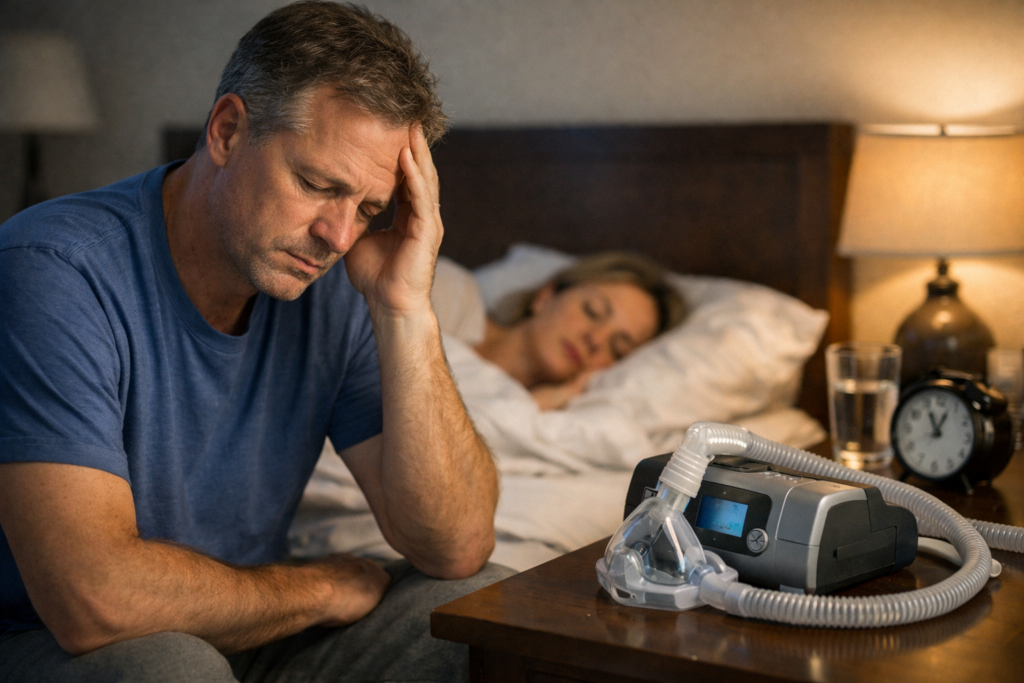
Starting treatment for sleep apnea can feel like a big step. You’ve gone through testing, received a diagnosis, and now you’re being asked to sleep with a machine. It’s new. It’s unfamiliar. And yes, it can feel intimidating at first.
But here’s something important to know: most people who struggle with treatment don’t fail because it doesn’t work — they struggle because they don’t get enough guidance during the adjustment phase.
At EL PASO SLEEP CENTER, we see it all the time. Patients start CPAP therapy, feel uncertain during the first few nights, and wonder if it’s worth continuing. The truth is, success usually depends less on the device itself and more on understanding how to work with it.
Let’s talk about why some people quit too soon — and how to make it sustainable.
The First Week Isn’t the Final Verdict
One of the biggest misconceptions is that treatment should feel perfect immediately.
It won’t.
Your brain and body need time to adapt to sleeping with consistent airflow. The mask may feel unusual. The sensation of pressurized air might take getting used to. That’s normal.
When prescribed as CPAP treatment for sleep apnea, the goal is long-term airway stability — not instant comfort perfection on night one.
Most patients who stick with it for a few weeks report significant improvement in how natural it feels.
Why Adjustment Is a Process, Not an Event
The phrase adjusting to CPAP machine doesn’t describe a single night — it describes a period of adaptation.
Think about it like starting orthodontic braces or a new workout routine. There’s a learning curve. Minor discomfort doesn’t mean something is wrong; it means your system is recalibrating.
Common early challenges include:
- Feeling aware of the mask
- Minor air leaks
- Nasal dryness
- Removing the mask unconsciously
The key is communication and small modifications — not quitting.
Comfort Is Customizable
Many patients don’t realize how adjustable modern equipment is. Masks come in different styles and sizes. Humidity levels can be modified. Pressure settings can be fine-tuned.
If something feels uncomfortable, it usually can be improved.
At EL PASO SLEEP CENTER, follow-up support is essential. Treatment isn’t “one and done.” It evolves based on patient feedback.
The most successful patients are the ones who ask questions early instead of silently tolerating discomfort.
Understanding the Real Benefits
It’s hard to stay motivated without knowing what you’re working toward. That’s why understanding CPAP benefits and side effects is so important.
Benefits often include:
- Noticeably improved morning clarity
- Reduced snoring
- Fewer nighttime awakenings
- Better daytime energy
- Improved mood stability
Possible temporary side effects may include:
- Mild nasal congestion
- Skin irritation
- Temporary bloating
Most side effects are manageable and decrease with adjustments.
When patients understand that short-term inconvenience often leads to long-term improvement, adherence improves significantly.
CPAP Is One Tool — Not the Only One
While highly effective, CPAP is part of a broader range of sleep apnea treatment options. Knowing this can reduce anxiety.
Some patients may combine therapy with:
- Weight management strategies
- Positional therapy
- Oral appliances
- Nasal treatment for congestion
- Stress reduction techniques
But for moderate to severe obstructive sleep apnea, CPAP remains the gold standard because it directly stabilizes airflow.
Understanding that you have options makes the process feel more collaborative and less intimidating.
The Turning Point Most Patients Experience
There’s often a moment — sometimes subtle — when patients realize they’re feeling different.
They wake up clearer. They don’t need three alarms. They don’t hit a 3 PM wall.
That’s when improving sleep with CPAP becomes more than a concept. It becomes personal.
Restorative sleep doesn’t always feel dramatic. Sometimes it just feels steady. Stable. Normal again. And that stability is powerful.
Why Long-Term Use Protects Your Health
Untreated sleep apnea affects more than energy levels. It can strain the cardiovascular system, increase blood pressure variability, and disrupt metabolic regulation.
Consistent airway support helps:
- Maintain oxygen stability
- Reduce nighttime stress responses
- Protect heart health
- Improve cognitive performance
- Support emotional regulation
The long-term impact goes far beyond simply feeling less tired.
Practical Tips for Long-Term Success
If you’re starting treatment — or considering giving it another try — these strategies can help:
- Use the device every night, even during naps
- Practice wearing the mask while awake
- Keep open communication with your sleep provider
- Address discomfort immediately
- Focus on long-term health, not short-term annoyance
Most importantly, give yourself permission to adapt gradually. You’re retraining your body to sleep properly again.
The Mindset Shift That Makes the Difference
Patients who succeed often stop seeing the device as an inconvenience and start seeing it as support.
Instead of thinking,
“I have to wear this.”
They begin thinking,
“This helps my body recover.”
That mindset shift changes everything.
Sleep isn’t passive. It’s biological repair. When breathing is stabilized, the brain can complete full sleep cycles, hormones rebalance, and the nervous system resets.
That’s not small. That’s foundational.
Conclusion
Quitting too early is common — but often unnecessary. With proper guidance, small adjustments, and realistic expectations, treatment can become a sustainable and life-changing part of your routine. Restorative sleep is not about perfection on night one; it’s about consistency over time. When you allow the process to work, the results speak for themselves.