You go to bed at a decent hour. You sleep seven or even eight hours. And yet… you still feel drained. If this sounds familiar, you’re not alone.
Many people assume that as long as they’re getting “enough hours,” their sleep must be fine. But quantity and quality are two very different things. You can technically sleep through the night and still experience significant sleep disruption that prevents your body from fully restoring itself.
At EL PASO SLEEP CENTER, we often meet patients who are confused by their exhaustion. They aren’t pulling all-nighters. They aren’t constantly waking up to check their phones. But something deeper is interfering with their sleep cycles — and their body feels the consequences.
Let’s talk about what might really be happening.
What Sleep Is Supposed to Do for You
Healthy sleep isn’t just unconsciousness. It’s a carefully structured biological process that moves through multiple stages:
- Light sleep
- Deep sleep
- REM sleep
- Repeated cycles throughout the night
Each stage serves a purpose. Deep sleep restores the body. REM sleep restores the brain. When this cycle runs smoothly, you wake up feeling clear, steady, and energized.
When it doesn’t, you may experience non restorative sleep, even if you don’t remember waking up during the night.
The Problem With Micro-Awakenings
One of the most overlooked sleep problems is something called sleep fragmentation. These are tiny awakenings — sometimes just seconds long — that you won’t consciously remember in the morning.
But your brain does.
These interruptions can be caused by:
- Subtle breathing changes
- Stress hormones
- Environmental noise
- Mild airway resistance
- Chronic tension
Individually, they seem insignificant. Collectively, they can prevent you from reaching and staying in deeper sleep stages.
The result? You wake up exhausted and start wondering why you’re waking up tired every day.
Why You Sleep All Night But Don’t Feel Better
One of the most frustrating experiences for patients is describing how they “sleep fine” but still feel depleted. This often points to sleep not feeling refreshed, which signals that the architecture of sleep — not just the duration — is compromised.
Your body may be cycling repeatedly into lighter sleep instead of progressing naturally. That means:
- Less muscle recovery
- Reduced cognitive restoration
- Hormonal imbalance
- Increased morning grogginess
Over time, this pattern creates a baseline of low energy that starts to feel normal — even though it isn’t.
Stress: The Silent Sleep Disruptor
Chronic stress is one of the most common but underestimated poor sleep causes. Even when your environment is quiet, your nervous system may not be.
When stress hormones like cortisol remain elevated at night, they:
- Increase brain alertness
- Lighten sleep stages
- Raise heart rate
- Trigger brief awakenings
You may not remember being awake — but your brain never fully powers down.
This kind of physiological alertness can create persistent unrefreshing sleep, especially in high-performing adults who are used to pushing through fatigue.
How Subtle Sleep Issues Affect Your Day
When sleep quality declines, the effects extend far beyond feeling sleepy.
Patients often report:
- Brain fog
- Increased irritability
- Difficulty concentrating
- Reduced productivity
- Afternoon crashes
- Higher caffeine dependence
These symptoms are frequently dismissed as “normal adult life.” But chronic exhaustion is not something your body is designed to tolerate long term.
Over time, sleep fragmentation can affect:
- Cardiovascular health
- Metabolic regulation
- Emotional resilience
- Immune function
That’s why ongoing sleep issues should always be evaluated — even if they seem mild.

You Don’t Have to Snore to Have a Sleep Problem
Many people assume that sleep disorders only exist if someone snores loudly or gasps for air. But breathing-related sleep instability can be subtle.
You may experience:
- Slight airway resistance
- Shallow breathing patterns
- Minor oxygen fluctuations
- Increased respiratory effort
These can trigger micro-arousals without dramatic symptoms. Without proper testing, they often go undetected.
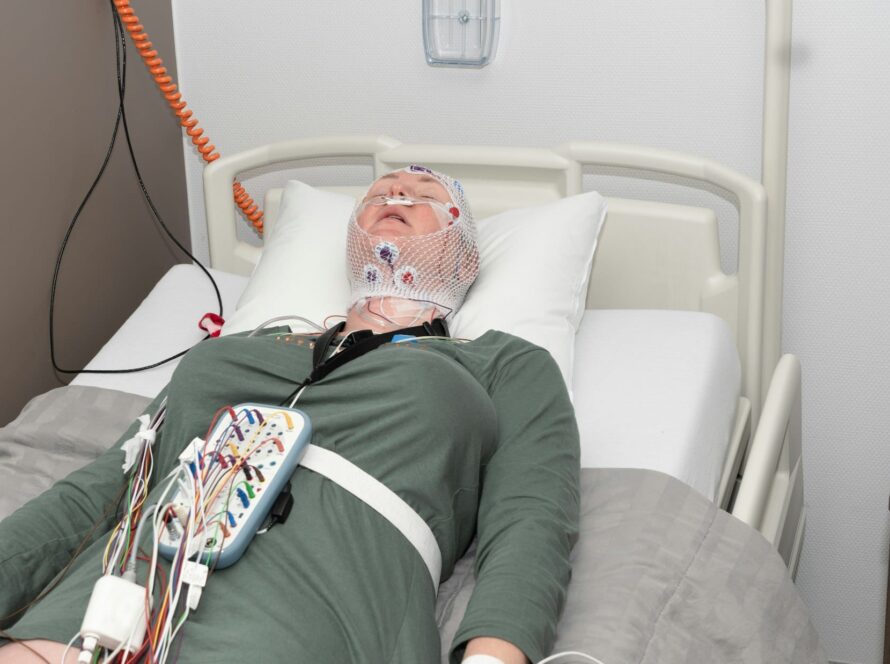
At EL PASO SLEEP CENTER, advanced sleep diagnostics allow us to measure these patterns in detail — including brain waves, oxygen levels, airflow, and muscle activity.
Signs It’s Time to Get Evaluated
If you experience any of the following consistently, it may be time to take a closer look:
- You feel exhausted despite sleeping 7–8 hours
- Your energy dips sharply in the afternoon
- You struggle with mental clarity
- You feel physically drained in the morning
- Your mood feels harder to regulate
Sleep should leave you restored — not depleted.
What Proper Treatment Can Change
Once the root cause of fragmented sleep is identified, treatment can be life-changing. Depending on the findings, solutions may include:
- Addressing breathing instability
- Managing stress-related arousal
- Adjusting sleep habits
- Treating underlying medical contributors
Patients are often surprised at how quickly improvement happens once sleep cycles stabilize.
When deep sleep returns consistently, you may notice:
- Clearer thinking
- Stable energy throughout the day
- Improved mood
- Reduced reliance on stimulants
- Better overall health markers
Restorative sleep isn’t a luxury. It’s foundational to how your body regulates itself.
Conclusion
If you’ve been living in a constant state of fatigue, it’s possible that subtle interruptions are quietly disrupting your sleep cycles. Feeling exhausted every morning isn’t something you have to accept as normal. When sleep quality is restored, everything else — energy, focus, resilience — begins to improve with it. The first step is understanding what your nights are truly telling you.